
Why You Can Orgasm Alone But Not With a Partner
(And why this isn’t a mystery — it’s a pattern.)
 If you can climax easily on your own but hit a wall the second someone else is in the room, nothing is “wrong” with you. This is one of the most common dynamics I see in my work. And it’s almost never about broken bodies.
It’s about context. Let’s pull it apart.
It’s Not “Just in Your Head.”
It’s in your nervous system. When you’re alone, there’s no audience. No performance review. No one to disappoint. You’re not thinking about your facial expressions nor calculating how long it’s taking and you’re not managing someone else’s ego.
Your body gets to settle, and this matters for orgasm.
The minute a partner enters the picture, most people start monitoring themselves:
-
Am I close yet?
-
Why isn’t this happening?
-
Are they bored?
-
Should I just fake it?
That mental step outside yourself is called spectatoring which happens when you start watching yourself instead of feeling yourself. When this happens you disrupt arousal. Orgasm isn’t created by effort, but rather by surrender.
And surrender doesn’t happen under evaluation.
You’re an Expert on Your Own Body. They’re Not.
You’ve had years — maybe decades — of learning the exact pressure, rhythm, angle, pace, and timing that works, while a partner will always be guessing.
Even a loving, attentive partner is working with incomplete information unless you give it to them.
And here’s the hard truth:
Many people have never actually told a partner what works.
Because:
-
It feels embarrassing.
-
It feels “too demanding.”
-
Or there’s a belief that a good lover should “just know.”
Unfortunately that’s just a lovely fantasy.
Sex is not telepathy, it’s skill-building. For partnered sex to feel as good as solo sex, you have to close the information gap.
The Stimulation Might Simply Not Be Enough
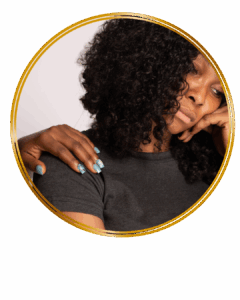 For people with vulvas, penetration alone rarely produces orgasm. The majority require direct clitoral stimulation.
That’s not dysfunction, its physioology and anatomy.
If your solo orgasms rely on very specific stimulation — and your partnered sex doesn’t include that — the outcome isn’t mysterious.
It’s math.
You can feel deeply connected.
You can love your partner.
You can be wildly attracted.
And still not be getting the kind of stimulation your body actually needs.
Sometimes It Simply Doesn’t Feel Safe Enough To Surrender
Orgasm requires letting go of your thoughts and anxieties.
If some part of you doesn’t feel fully safe — emotionally, relationally, or historically — your nervous system will protect you.
That protection can look like:
-
Staying slightly tense
-
Not fully dropping in
-
Hovering at the edge but not crossing it
This doesn’t automatically mean your relationship is doomed.
It can be subtle:
-
A fear of being fully seen
-
Body self-consciousness
-
The belief that pleasure is indulgent or selfish
-
Old conditioning that says you have to “earn” it
These layers are common. And they usually predate your current partner.
What Actually Helps
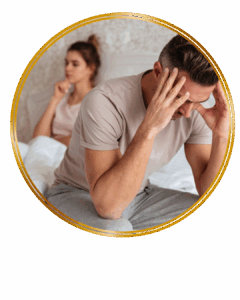 1. Talk about it.
Yes, it’s awkward. And yes, it’s almost always relieving once it’s said.
Needing something specific isn’t criticism, but an opportunity for collaboration.
2. Bring solo sex into partnered sex.
- Touch yourself.
- Guide their hand.
- Use a vibrator.
By doing this you close the gap between what works alone and what happens together.
3. Slow everything down.
Most partnered sex is rushed in ways solo sex isn’t. Stay in the phases that feel good and let arousal build without racing toward a goal.
4. Remove orgasm as a test.
The more orgasm becomes something you have to achieve, the less likely it is to happen.
When it stops being a performance metric, your body can finally exhale.
5. Get support if you need it.
If anxiety, trauma, or deep conditioning are part of this pattern, working with a trained sex therapist can be transformative.
You’ve Got This
 If you can orgasm alone, your body works. That’s excellent news. The issue isn’t capacity.
It’s context which means its about nervous system regulation including
- Communication.
- Skill.
- Permission.
The goal isn’t to perform better for someone else. It’s to feel safe enough to stop performing at all.