
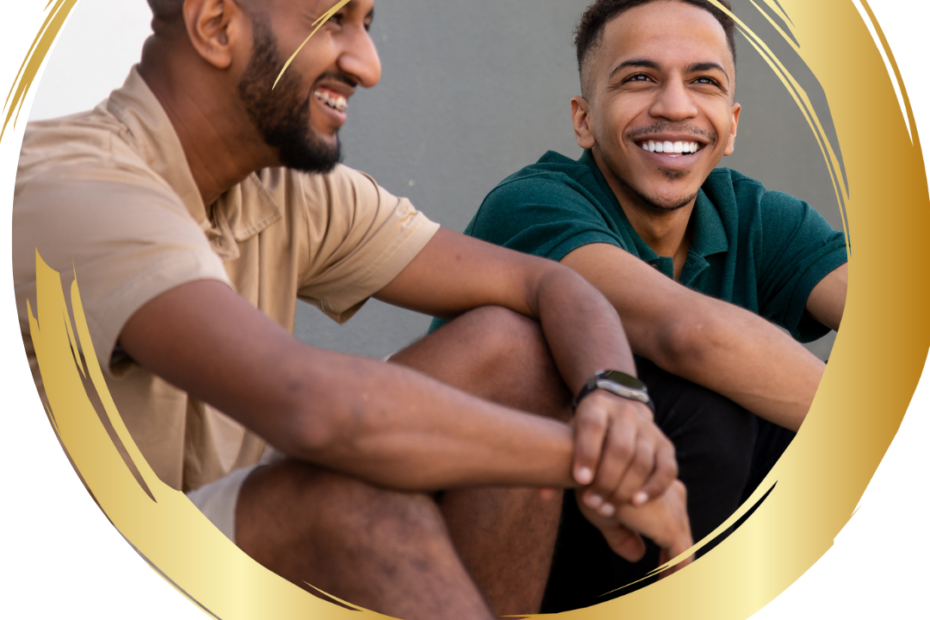
The Unspoken Challenges: Understanding Men’s Struggles in Modern Relationships, Friendships and Dating
 Dating has never been simple, but today’s landscape presents unique challenges that often go unacknowledged. While everyone faces obstacles in their romantic lives, men encounter specific struggles that deserve honest discussion. Understanding these challenges isn’t about comparing difficulties or dismissing anyone else’s experiences—it’s about fostering empathy and opening up needed conversations.
And you might be wondering how I , as a woman, can assume to know much about the perils of dating, relating and connection for men. My knowledge comes not only from multiple clinical degrees and almost 30 years in the work of sex and relationships, but also the literal thousands of conversations I have had with men over this time, and the patterns and themes I see in their struggles. These exend way beyond the so-called ‘loneliness epidemic’ and ‘the manosphere’, but the actual ways men are struggling to catch up in a society that is demanding they show up more fully than their fathers and grandfathers, but with fewer guides, role models or reflective skills to support them. In these new emerging relationships, relational skills demand they are more than just wads of cash and hard cocks, but reflective, engaged, humans; and this is a level of accountability most men are unaccustommed to – and it shows.
The Pressure of Initiation
One of the most consistent pressures men face is the expectation to make the first move. Despite evolving gender roles in other areas of life, hetero dating often maintains traditional scripts where men are expected to initiate conversation, ask someone out, plan the date, and navigate the early stages of courtship.
This creates a particular vulnerability. Rejection, while universal in dating, can feel especially frequent for men who are expected to put themselves out there repeatedly. Each “no” requires mustering the courage to try again, and the cumulative effect of multiple rejections can erode confidence over time. The emotional toll of constantly being the one to risk rejection is real and often minimized.
The Minefield of Modern Communication
Today’s digital dating environment has created new complexities. Men often describe feeling confused about how to show interest without being “too much,” how to be persistent without being pushy, and how to express attraction without being inappropriate. The line between being engaged and being overwhelming can feel impossibly thin.
Mixed signals are particularly challenging when there’s an expectation to “read between the lines” while also being told to take everything at face value. Many men struggle with knowing when to take initiative and when to step back, especially when direct communication about interest levels isn’t always forthcoming.
The Financial Burden
While conversations about splitting bills are becoming more common, the expectation that men will pay for dates remains prevalent. This creates financial pressure that can limit dating frequency, especially for younger men or those facing economic challenges. The anxiety about whether one can “afford” to date, combined with concerns about being judged based on where you can take someone or what you can provide, adds stress to what should be an enjoyable experience.
Navigating Vulnerability
Society has made progress in encouraging emotional openness, yet men often receive contradictory messages about vulnerability. They’re told to open up and share their feelings, but may find that doing so too early or in the wrong way leads to loss of interest. Finding the balance between being emotionally available and maintaining the confidence that’s often expected can feel like walking a tightrope.
Many men describe struggling with when and how much to reveal about their insecurities, fears, or past experiences. The fear of being seen as “weak” or unattractive for showing normal human emotions creates a constant internal calculus.
Relational Skills Shortage
Until recently, men had been able to get away with the bare minimum of conversational and relational skills, knowing that as long as they had the money and the goods, the women around them would take care of the rest – meaning the sex, the emotional management, domestic management, social management and tending to everything else behind the scenes. But nowadays, as many women are looking for partners across the gender spectrum who demonstrate relational intelligence, straight men in particular are falling short. Many were never taught to reflect on the experiences of others and hold these at the center of their conversations. Few have learnt how to demonstrate active interest in the inner-world of their partners. Many lack effective attunement skills or how to hold a conversation that centers on making the other person feel seen, valued and cared for. As such, this is one area of modern relationships where men are really showing a deficit, as many women are no longer accepting this lack of awareness in dating, friendships or in long-term relationships.
The Confidence Paradox
Confidence is frequently cited as attractive, but building genuine confidence is challenging when you’re facing regular rejection or feeling uncertain about the “rules” of engagement. Men often feel caught between being assertive (which risks being seen as aggressive) and being too passive (which risks being seen as uninterested or unmasculine). This is compounded by the reality that many men struggle with their own self-image, body confidence, and feelings of inadequacy—struggles that are often overlooked because of stereotypes suggesting men don’t face these issues. Then, when met with constructive criticism and feedback from partners or potential partners on how to do better, many men struggle to hold complex emotions like confidence alongside regret or remorse at the same time, and simply skip from brazen confidence to cripling shame, leaving them paralyzed with ineptitude and shut-down. This leaves their partners to manage the fall-out for themselves and those impacted by the inability to step up and contribute to the relationship emotionally.
The Success Metrics
There’s often an underlying pressure to demonstrate success, stability, and a clear life direction before being “ready” to date seriously. While everyone appreciates ambition, men can feel they’re being evaluated on their career trajectory, earning potential, and material markers of success in ways that feel reductive.
This creates particular challenges for men going through transitions, career changes, or facing economic uncertainty—times when support would be most valuable but when they may feel least “dateable.”
The Queer Experience: Beyond the Hookup Culture
 For queer men seeking meaningful relationships, the dating landscape presents its own distinct set of challenges. While hookup culture exists across all orientations, queer men often describe feeling like apps and spaces are overwhelmingly geared toward casual encounters, making it difficult to signal interest in something more substantial without being dismissed as boring or naive.
The smaller dating pool is a mathematical reality that creates unique pressures. In many areas, especially outside major cities, the number of potential partners is significantly limited. This can lead to a phenomenon where queer men feel they need to “settle” or compromise on compatibility out of scarcity rather than genuine connection. The pressure intensifies when social circles overlap heavily—running into exes or navigating complex relationship histories within tight-knit communities becomes inevitable.
Many queer men also navigate the challenge of varying degrees of outness. Finding someone at a compatible place in their journey—whether that’s about family acceptance, professional openness, or personal comfort—adds another layer of complexity. The person you’re interested in might not be ready to be publicly out, or you might be at different stages of self-acceptance, creating practical and emotional obstacles to building a visible, integrated relationship.
There’s also the weight of representation and community expectations. Some queer men describe feeling pressure to date in certain ways, to present themselves according to community norms or subcultures, or to navigate political dimensions of relationships that straight men rarely consider. The question of masculinity takes on different dimensions—how you present, what “type” you’re perceived as, and where you fit within community categories can feel both limiting and inescapable.
Internalized homophobia and shame can also complicate the search for genuine connection. Even in 2026, societal messages about LGBTQ+ relationships being “less than” can seep in, affecting self-worth and the ability to envision a fulfilling long-term partnership. Finding someone who’s done the work of unpacking these internalized beliefs—and continuing to do that work yourself—is crucial but not always easy.
Finally, there’s often a lack of relationship models and roadmaps. Without as many visible examples of long-term queer relationships, especially in previous generations, many queer men are figuring out what commitment looks like for themselves without inherited scripts. This can be liberating but also isolating when you’re trying to build something serious in a culture that may not always take your relationships as seriously as heterosexual ones.
Loneliness and Limited Support
When dating struggles persist, many men find they have limited outlets to discuss their experiences. There’s often a stigma around admitting to dating difficulties, as if it reflects personal failure rather than the reality that finding a compatible partner is genuinely hard. The lack of spaces to process these experiences without judgment can deepen feelings of isolation.
Moving Forward
Acknowledging these challenges isn’t about fostering resentment or suggesting men have it worse than others—everyone faces dating difficulties, and those challenges deserve recognition too. Rather, it’s about creating more honest conversations about modern dating realities and men acknowledging where they are falling short and committing to developing new skills to meet the changing times.
Some steps that can help:
For individuals: Commit to developing relationship skills like emotional attunement, curiousity about the experiences of others, active listening and prioritizing connection over performance. Practice self-compassion when dating doesn’t go as hoped. Rejection isn’t a referendum on your worth. Seek out and offer supportive friendships where you can be honest about your experiences. Focus on authentic connection rather than performing a role.
For all of us: Be more direct in communication. If you’re interested, express it clearly. If you’re not, be kind but honest. Share the “work” of dating—initiative, planning, and vulnerability can be mutual. Recognize that everyone’s trying to navigate an imperfect system.
Dating challenges exist across the board, and perhaps the most constructive path forward is greater empathy and understanding for everyone’s struggles. When we can talk openly about these experiences without defensiveness or comparison, we create space for more authentic connections—which is, after all, what most people are truly seeking.
Ready to go deeper. Join me for coaching sessions here , read my book here and my Online Pleasure School is here.