

Beyond the Bedroom: How Polyamory Connects to Broader Social Justice
When people think about polyamory, they usually focus on the interpersonal—the jealousy, the scheduling conflicts, the complicated group chat dynamics. But zoom out slightly, and polyamory stops looking like just a relationship choice and starts looking like a lens through which we can examine power, privilege, and social structures. Who gets to practice relationship diversity? What economic conditions make it possible? Whose version of non-monogamy gets celebrated versus stigmatized?
These aren’t abstract questions. The answers reveal how deeply our intimate lives are shaped by forces much larger than personal preference. Polyamory sits at the intersection of capitalism, gender politics, queer liberation, legal discrimination, and cultural power—whether its practitioners realize it or not.
The Time Poverty Problem
 One of the most common reasons polyamorous relationships fail has nothing to do with love and everything to do with capitalism. People simply don’t have enough time. When you’re working fifty or sixty hours a week to afford rent, when your employer expects you available by email at all hours, when you’re cobbling together multiple gig jobs without benefits—maintaining one healthy relationship becomes difficult. Maintaining several becomes nearly impossible.
This isn’t a personal failing. It’s a structural issue. The polyamory communities that function best often consist of people with flexible schedules, remote work options, or financial cushions that allow them to prioritize relationships over constant productivity. There’s a reason relationship anarchy—a framework that rejects hierarchies in relationships—often connects romantic freedom to broader critiques of how capitalism colonizes our time and energy.
Some polyamory advocates argue that true relationship diversity requires economic justice: shorter work weeks, universal healthcare that isn’t tied to a single spouse’s employment, communal childcare that doesn’t assume a nuclear family model. When people lack the basic resources to live, asking them to navigate the complex emotional terrain of multiple partnerships feels almost absurd.
The Gender Dynamics No One Wants to Discuss
Polyamory exposes gendered patterns of emotional labor with uncomfortable clarity. Women in polyamorous networks frequently report doing the invisible work that keeps everything functioning: managing shared calendars, mediating conflicts between partners, providing reassurance, remembering birthdays, initiating difficult conversations. The emotional labor that burdens women in monogamous relationships gets multiplied across multiple connections.
Meanwhile, research and anecdotal accounts suggest that men often struggle more intensely with jealousy when their female partners have other male partners than women do in the reverse situation. This asymmetry reflects broader patriarchal attitudes about women’s sexuality and autonomy. A man with multiple partners might be seen as virile; a woman with multiple partners still risks being called a slut, even in supposedly progressive polyamorous spaces.
The discomfort goes deeper. Many women discover that the men enthusiastic about opening their previously monogamous relationship become considerably less enthusiastic when their female partner actually finds other partners—especially if those partners are also men. What looked like enlightened thinking about love turns out to still carry the watermarks of possessiveness and control.
Queer Roots and Straight Appropriation
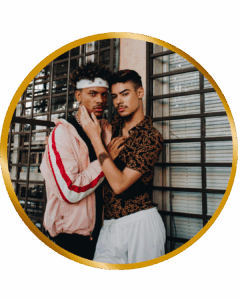
Polyamory has deep historical roots in LGBTQ+ communities. When you’re already questioning heteronormative relationship structures, challenging the assumption of monogamy becomes a natural extension. Queer people have long practiced various forms of non-monogamy, often out of necessity—creating chosen families and relationship networks that could provide support in a hostile world.
Many queer polyamorous people see their relationship choices as inherently connected to broader liberation struggles. If we can question the gender binary and compulsory heterosexuality, why not question compulsory monogamy? The personal becomes explicitly political.
But there’s tension when straight and cisgender people adopt polyamory without acknowledging this history or the specific vulnerabilities queer poly people face. A straight married couple dating separately faces different risks than a queer polycule navigating employment discrimination, housing insecurity, or custody battles. When mainstream polyamory discourse centers straight experiences while erasing queer contributions, it replicates the same dynamics of appropriation visible in other cultural spheres.
Legal Invisibility and Structural Violence
 Polyamorous people exist in a legal gray zone that can have devastating consequences. Marriage rights extend to only two people. Hospital visitation policies may exclude non-legal partners during medical emergencies. Custody decisions can go against parents whose polyamory is deemed evidence of unfitness or instability.
People have lost their children, their housing, and their jobs when their relationship structures became known. A teacher in a conservative district could face termination. A parent could lose custody in a contentious divorce. Landlords can refuse to rent to unconventional family configurations.
This connects to broader questions about which families the state recognizes and protects. Legal marriage comes with over a thousand federal benefits and protections. Polyamorous families have access to none of these, regardless of how committed or stable their relationships are. When a long-term partner dies, their other partners may have no legal standing to make decisions, inherit property, or even attend the funeral if biological family objects.
The lack of legal recognition isn’t just symbolic—it’s a form of structural violence that renders certain kinds of love and care literally invisible to institutions.
Class, Access, and Who Gets to Be Polyamorous
The polyamory that gets discussed in books, podcasts, and therapy offices is often a remarkably privileged version. It assumes access to therapy for processing emotions, private spaces for intimate encounters, the financial stability to prioritize relationships over survival, and freedom from community judgment.
Working-class people juggling multiple jobs don’t have the bandwidth for lengthy processing conversations. People living in multigenerational households lack privacy for hosting multiple partners. Those in tight-knit religious or cultural communities may face ostracism that carries real economic and social costs.
This doesn’t mean working-class people or people of color don’t practice polyamory—many do. But the version that gets centered in mainstream discourse reflects the experiences and values of predominantly white, middle-class, educated people. When polyamory becomes synonymous with buying expensive books about attachment theory and attending weekend workshops, it excludes the very people who might benefit most from reimagining relationship structures.
The Consent Culture Connection
The polyamory community’s emphasis on explicit consent, boundary negotiation, and ongoing communication has influenced broader conversations about sexual ethics in the post-MeToo era. The idea that consent is enthusiastic, ongoing, and clearly communicated—not just the absence of a “no”—originated partly in sex-positive and non-monogamous communities.
This has been genuinely valuable. The frameworks polyamorous people use for negotiating boundaries and checking in about comfort levels offer tools that could improve all relationships, monogamous or otherwise.
But polyamory spaces aren’t immune to abuse. Predators have used polyamory rhetoric to pressure partners, avoid accountability, or create situations where people feel they can’t say no without being labeled jealous or possessive. The language of ethical non-monogamy can be weaponized just as easily as any other progressive framework when people are acting in bad faith.
Individualism or Interdependence?
 Critics of polyamory often characterize it as hyper-individualistic consumerism applied to relationships—maximizing options, refusing to sacrifice, treating partners as interchangeable sources of specific needs. There’s something to this critique. The language some polyamorous people use—talking about partners meeting certain needs while others meet different needs—can sound transactional.
But defenders argue that polyamory, practiced well, actually builds broader networks of care and interdependence. Instead of expecting one person to be everything, you create community. Instead of the isolated nuclear family, you develop extended chosen families who share resources, provide childcare, and support each other through difficulty.
The reality is probably that polyamory can be either individualistic or communal depending on how it’s practiced. A person treating partners as modular need-fulfillers they can swap out is practicing something quite different from a polycule sharing a home and raising children collectively.
Mental Health and Neurodiversity
Some neurodivergent people find polyamory’s explicit communication requirements easier to navigate than the unspoken assumptions of monogamous dating. If you struggle with reading social cues or understanding implicit expectations, having everything spelled out in clear language can be relieving.
Others find the complexity overwhelming—tracking multiple people’s needs, managing several relationship dynamics, processing the heightened emotions that often arise. For people with anxiety, OCD, or certain attachment patterns, polyamory can exacerbate existing struggles.
This connects to larger questions about whose needs relationship norms are built around. Conventional monogamy assumes certain neurotypical communication styles and emotional patterns. Polyamory creates space for different approaches but can also demand cognitive and emotional labor that not everyone can provide.
Race, Power, and Whose Non-Monogamy Counts
White-dominated polyamory spaces often operate as if relationship diversity is a novel progressive invention, ignoring how non-Western cultures have long practiced various forms of non-monogamy. They also tend to ignore how relationship choices are racialized.
Black polyamorous people report facing stereotypes about hypersexuality. Their relationship choices get interpreted through racist tropes rather than seen as legitimate ethical decisions. Asian people in polyamorous communities may face different cultural pressures around family obligation and filial piety that white practitioners don’t navigate.
The framing of “ethical non-monogamy” itself can be problematic—it implies that Western-style negotiated polyamory is ethical while other cultural practices of non-monogamy are not. When wealthy white men had mistresses and second families, that wasn’t called ethical. When powerful men in non-Western cultures have multiple wives, Western observers condemn it as oppressive. But when educated white people in cities practice polyamory with the right vocabulary, it’s celebrated as enlightened.
These double standards reveal that it’s not just the relationship structure that matters—it’s who’s practicing it and whether they have the cultural power to name it as legitimate.
The Radical Question
 All of this leads to a central tension: Is polyamory inherently radical, or can it be absorbed into existing power structures without changing anything fundamental?
Some argue that polyamory challenges possessiveness, jealousy, and social control at their roots. That learning to celebrate your partner’s joy with others, to communicate needs clearly, to question assumptions about ownership—these are genuinely subversive practices that could reshape how we think about love, family, and community.
Others point out that wealthy and powerful men have always had de facto polyamory through mistresses, second families, and the tacit acceptance of their infidelity. Making that arrangement “ethical” by adding communication and consent is an improvement, but it doesn’t automatically make it liberatory. You can practice polyamory while still replicating every oppressive dynamic of conventional relationships—just with more people.
The answer probably depends on how polyamory connects to other commitments. Polyamory practiced alongside feminism, anti-racism, economic justice, and queer liberation looks very different from polyamory practiced by people who simply want more sexual variety while maintaining all their other privileges.
Love in Context
Here’s what becomes clear when you examine polyamory through a social justice lens: our intimate lives don’t exist in a vacuum. Who we love, how we love, and what forms our relationships take are all shaped by economic systems, legal structures, cultural norms, and distributions of power.
This doesn’t mean polyamory is good or bad, radical or reactionary. It means it’s complicated, like everything else humans do. The same relationship structure can be liberating for one person and exploitative for another. It can challenge social norms in one context and reinforce them in another.
What matters is approaching relationship diversity with awareness of these larger contexts. Recognizing that your ability to practice polyamory might depend on privileges others don’t have. Understanding that the personal is political, but that doesn’t automatically make your personal choices politically righteous. Being willing to examine how power operates even in relationships that feel consensual and ethical.
Polyamory won’t save us from capitalism, dismantle patriarchy, or solve racism. But practiced with genuine care, critical awareness, and connection to broader movements for justice, it might offer one small way of imagining and enacting different possibilities for how we organize our intimate lives.