
Why Do I Lose Arousal Halfway Through Sex?
The real reasons your body stops responding—and what it's trying to tell you.
One of the most common questions people ask about sex is, "Why do I lose arousal halfway through?"
 Maybe you were enjoying yourself, and then something changed. Your erection softened, or lubrication disappeared and then pleasure faded. So your mind drifted and suddenly you're wondering what's wrong with you, whether your partner noticed, or how to get things back.
Most people assume they've done something wrong, but usually, they haven't.
Arousal isn't something you switch on at the beginning of sex and expect to stay on until the end. It's a living process that constantly responds to what's happening inside you and around you. Your nervous system is continually asking one question: Is this still worth staying engaged with? And sometimes the answer changes.
The Dual Control Model
One of the most useful ways to understand this comes from sex researcher something called The Dual Control Model of Sexual Response, developed in the late 1990s by Dr. John Bancroft and Dr. Erick Janssen,. It proposes that human sexual arousal is determined by a balance between two independent neurological systems: sexual excitation (the "gas pedal") and sexual inhibition (the "brakes"). Your accelerator notices things that increase arousal while simultaneously your brakes notice anything that signals discomfort, distraction, pressure, uncertainty, or risk, and during sex both these systems are running at the same time.
That means you can be highly aroused one minute and then lose it the next—not because desire has disappeared, but because something activated the brakes.
Sometimes it's obvious. Sex becomes uncomfortable. A position changes. The stimulation that was working stops. Your partner speeds up when you wanted them to slow down. Your body simply responds by becoming less engaged.
Attention Is the Fuel
 Other times the change is psychological. A fleeting thought like, Am I taking too long?, Do I look okay?, I hope I don't lose my erection, or I really need to orgasm this time can be enough to pull you out of your body and into self-monitoring. Once your attention shifts from experiencing pleasure to evaluating your performance, arousal often begins to fade. Sex asks us to be present while anxiety pulls us into observation which are two very different states.
This is one reason performance anxiety is so disruptive. It isn't that anxiety directly turns arousal off as much as it's anxiety competes for the same attention that pleasure requires. The more cognitive effort you spend analyzing, predicting or managing the experience, the less attention remains available for actually experiencing it.
Timing Matters
Many people begin sexual play before their bodies are fully aroused. For some peoplw, especially women, arousal can take a significant amount of time ( like up to an hour) and this is completely normal. Excitement and willingness aren't the same thing

as physiological readiness. Your mind might be enthusiastic, but your nervous system, blood flow and muscles may still be warming up. Without enough time for arousal to build, the body often struggles to sustain it.
For many people this is especially true if they experience responsive desire. Rather than feeling desire first and then becoming sexual, responsive desire develops through pleasurable touch, emotional connection and gradual engagement. It's the most common pattern in long-term relationships and for many women, although plenty of men experience it too.
Responsive desire isn't fragile, but it does depend on the conditions that allow it to grow. If the emotional atmosphere shifts, if you suddenly feel pressured, disconnected, criticised or distracted, your desire may recede just as naturally as it emerged.
Physical capacity matters too.
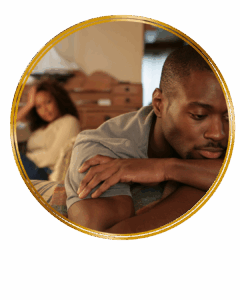 Your body doesn't separate sex from the rest of your life. Poor sleep, chronic stress, medication, alcohol, illness, hormonal changes or simple exhaustion all affect your nervous system's ability to stay engaged. You may genuinely want sex while simultaneously lacking the physiological resources to maintain arousal. Desire and capacity are related, but they are not the same thing. The mistake many people make is treating the loss of arousal as a problem to hide or overcome as quickly as possible. They try harder and force themselves to continue or they panic and chase the feeling they just lost.
Ironically, all of those responses create even more pressure, which presses harder on the brakes.
A more useful question isn't, How do I get my arousal back?
It's, What changed?
- Did your attention wander?
- Did the stimulation stop matching what your body needed?
- Did discomfort creep in?
- Did you begin worrying about your partner's experience instead of your own?
- Did your body simply become tired?
These aren't signs of failure. They're information.
Instead of pushing through, slow down. Tell your partner what you're noticing. Ask to return to what was feeling good. Pause if you need to and let your body catch up instead of demanding that it perform.
The goal isn't to keep arousal at maximum intensity from beginning to end. Human arousal naturally rises, falls, plateaus and returns. The healthiest sexual experiences aren't the ones where nothing ever changes. They're the ones where both people can notice those changes without panic, shame or pressure.
Your body isn't betraying you, but it is communicating with you. The more you learn its language, the easier it becomes to work with it instead of against it.
 Ready to go deeper. Join me for